Friday, February 3, 2012

2012 Scion FR-S Race Car Need For Speed


The 600-horsepower FR-S race car is the result of a collaboration between Scion Racing and GReddy. The FR-S will be competing in the 2012 Formula DRIFT series with veteran driver Ken Gushi behind the wheel.
The race car is inspired by the 2013 Scion FR-S, a compact rear-wheel-drive sports car that will go on sale in the spring of 2012. The high-performance coupe is the fifth model to join the Scion family.  
READ MORE - 2012 Scion FR-S Race Car Need For Speed

2013 Chevy Corvette 427


The Corvette 427 Convertible blends elements of the Z06 and ZR1 models to create the fastest and most-capable convertible in Corvette’s history.
Its heart is the 427-cubic-inch (7.0L) LS7 engine from the Corvette Z06. Rated at 505 horsepower (377 kW) and 470 lb.-ft. of torque (637 Nm), it is the most powerful engine ever installed in a production Corvette convertible – and, like the Z06, the 427 Convertible is only available with a six-speed manual transmission.
Supporting performance elements in the Corvette 427 Convertible include the driveline and rear axle system from the Corvette Z06, a rear-mounted battery and standard Magnetic Selective Ride Control. The standard 19-inch front and 20-inch rear wheels are wrapped in ZR1-style Michelin PS2 tires. Lightweight machine-face Cup wheels – introduced on the 2012 Corvette Z06 with Z07 and Corvette ZR1 with PDE performance packages – come standard and include unique gray-painted pockets. Black Cup wheels or chrome ZR1-style wheels are also available.
The combination of low mass and high output will make the 427 Convertible one of the fastest convertibles in the world, delivering estimated 0-60 performance of 3.8 seconds, quarter-mile performance of 11.8 seconds, lateral acceleration of 1.04 g and a top speed of more than 190 mph.
The 427 Convertible is available in 2LT, 3LT and 4LT trim levels and will carry a unique vehicle identification number sequence, similar to the Corvette ZR1.

READ MORE - 2013 Chevy Corvette 427

Tuesday, October 11, 2011

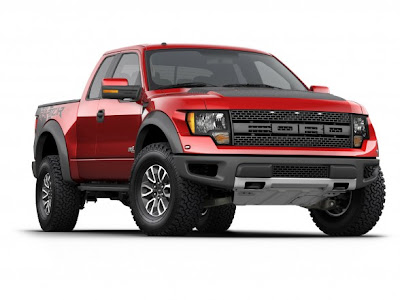
2012 Ford F-150 SVT Raptor


READ MORE - 2012 Ford F-150 SVT Raptor

Saturday, April 23, 2011

2011 Acura RDX FWD

2011 Acura RDX

2011 Acura RDX FWD

The Acura RDX was designed to be among the sportiest in its segment, and except for a couple issues, the driving experience of the 2011 model is engaging as with our 2007 RDX long-termer. And that long-termer didn't benefit from the changes Acura made for the 2010 model year.
Yes, the RDX now wears Acura's polarizing power plenum grille, but the changes are far more significant than a restyled exterior and attractive new 18-inch wheels. A rear-view camera, changes to the leather seating surfaces, more ambient lighting, and USB-port connectivity now come standard.
When the RDX was introduced, it was available only with Honda's super-handling all-wheel drive. That strategy was rethought and now there's the front-drive model we sampled. It boasts a cheaper entry-level price and better fuel economy with the turbocharged 2.3-liter four-cylinder engine making 240 horsepower at 6000 rpm and 260 pound-feet of torque at 4500 rpm. The engine is plenty powerful, and the turbo surge makes the RDX feel quicker than it really is at times.
Back when we tested our long-term RDX, it sprinted from 0-60 mph at 7.0 seconds. Now that the front-wheel-drive crossover is 200 pounds lighter, expect a slightly improved time. RDX drivers will need to develop a lighter touch with the throttle or else fuel economy will suffer.
The brakes, too, were improved for the refreshed RDX. Acura says the upgrades result in more feel and less grabbiness to the binders, although they still are a touch on the sensitive side. Regardless, there's no arguing with revised rear brake pad actuation that translates to less drag and longer pad life.

2011 Acura RDX FWD


READ MORE - 2011 Acura RDX FWD

Porsche Panamera S Hybrid

Porsche Panamera S Hybrid
For Porsche, performance is always paramount, but now it must also be “intelligent”. Apparently, hybrids = intelligence, as evidenced by Porsche’s new Panamera S Hybrid, which its debut today at the 2011 New York show and is another showcase of the German automaker’s emerging Porsche Intelligent Performance philosophy.
As far as we’re concerned, with 380 horsepower, a 0-to-60 time of 5.7 seconds and a top speed of 167 mph, you can call it a dunce and we’ll still drive it. Fast.
Essentially the same system as found under Cayenne S Hybrid, the Panamera S Hybrid employs a 3.0-liter supercharged V-6 engine with 333 horsepower, augmented by a 47-horsepower (34 kW) electric motor, which also doubles as the generator and starter. Porsche says it can roll for approximately one mile on battery juice alone and speeds of up to 50 mph in around town driving situations. Final EPA fuel economy ratings are yet to be announced, but expect it to be close to the Cayenne hybrid’s 20/24 city/highway mpg rating.
The Panamera S Hybrid is a higher-spec version of the conventional V-8 S model and comes with the automaker’s adaptive air suspension and PASM adaptive shock absorber system, as well as variable-assist power steering among other options. In addition, there’s a special display setup that highlights several of the hybrid system’s operations.
All of this intelligent performance stuff doesn’t come cheap. The Panamera S Hybrid’s base price is $95,000 (excluding destination) and is set to hit dealerships later this year.


Porsche Panamera S Hybrid

Porsche Panamera S Hybrid

Porsche Panamera S Hybrid
READ MORE - Porsche Panamera S Hybrid

2012 Nissan Versa Sedan

2012 Nissan Versa Sedan
Compact sedans are all the rage, with a host of new entries from both domestic and import manufacturers reaching showrooms recently. Nissan will cash in on that popularity with the 2012 Versa sedan, debuting today at the New York auto show with refreshed styling and tweaks to improve fuel economy.
The 2012 Versa rides on an evolution of the last car's platform called V, for Versatile. The sedan's wheelbase and width are unchanged from the current model, but it loses about an inch of length and height. Despite this, Nissan says that packaging improvements for the engine and transaxle mean there is more trunk space. The new car also should be marginally lighter than before.
Styling-wise, the new Versa takes cues from the larger Altima and Maxima sedans, starting with a new grille design and oval-shaped headlights, and continued with a smoother rear and reshaped taillights that sweep from the rear bumper to the Versa's rear haunches. The hood and sides are broken up by an assortment of creased character lines akin to those seen on the Hyundai Elantra. Whereas the old Versa had a more conventional flat roof and steep rear window, the new car's roofline gently slopes toward the trunk, following the coupe-like trend. The exterior changes reportedly help achieve a low 0.31 drag coefficient.
Nissan claims the Versa's rear seats offer more legroom than a BMW 5 Series or Mercedes-Benz E-Class, and says much effort was spent making the seats comfier and the interior more spacious and appealing. The new dashboard has rounded, contoured controls in place of the drab flat-plastic layout in the old car, a simpler dual-gauge instrument cluster, and a redesigned steering wheel. That said, the interior continues to showcase expanses of plain plastics and fabrics (in either Sandstone or Charcoal color schemes) that don't look particularly upscale.

2012 Nissan Versa Sedan

2012 Nissan Versa Sedan

2012 Nissan Versa Sedan

2012 Nissan Versa Sedan

2012 Nissan Versa Sedan

2012 Nissan Versa Sedan

2012 Nissan Versa Sedan

2012 Nissan Versa Sedan

2012 Nissan Versa Sedan


2012 Nissan Versa Sedan
READ MORE - 2012 Nissan Versa Sedan

LinkWithin

Related Posts Plugin for WordPress, Blogger...